Leadership programmes often create strong conversations and clear intentions for change.
However, without the right conditions in place, those intentions rarely translate into consistent behaviour.
This is one of the most common challenges organisations face when investing in training initiatives. Learning may be valuable, engaging and well received. Yet the day-to-day behaviours across teams remain largely unchanged.
BehaviourShift was developed to address this challenge.
What is BehaviourShift?
BehaviourShift is a structured framework designed to help organisations turn learning into real, sustained behavioural change.
Rather than focusing solely on learning events or training programmes, BehaviourShift examines the organisational conditions that determine whether new behaviours are adopted, reinforced, and embedded over time.
The methodology helps organisations:
• Understand why behavioural change may not be sticking
• Identify the conditions required for behaviour to succeed
• Activate behaviour change through practical application
• Reinforce behaviours so they become part of everyday leadership practice
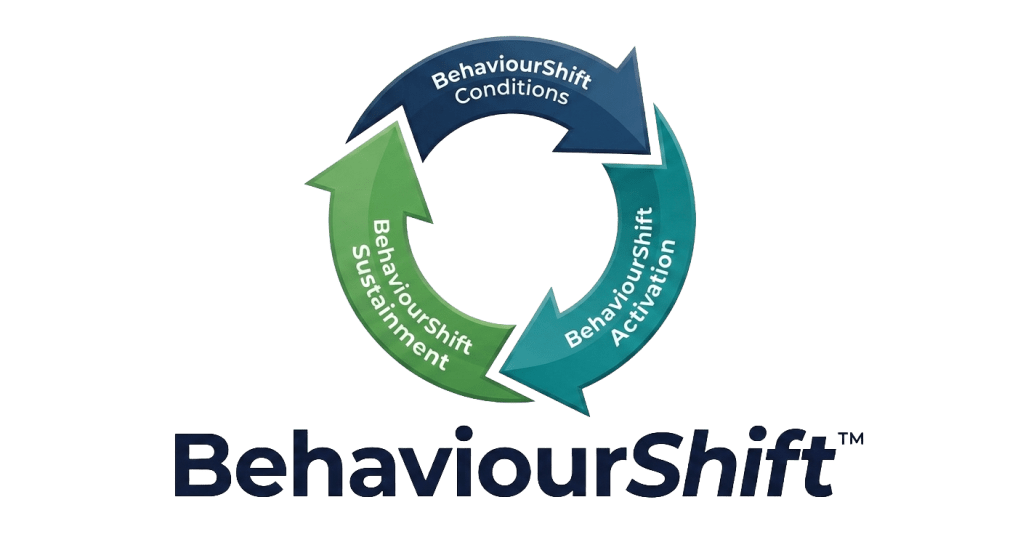
The BehaviourShift Framework
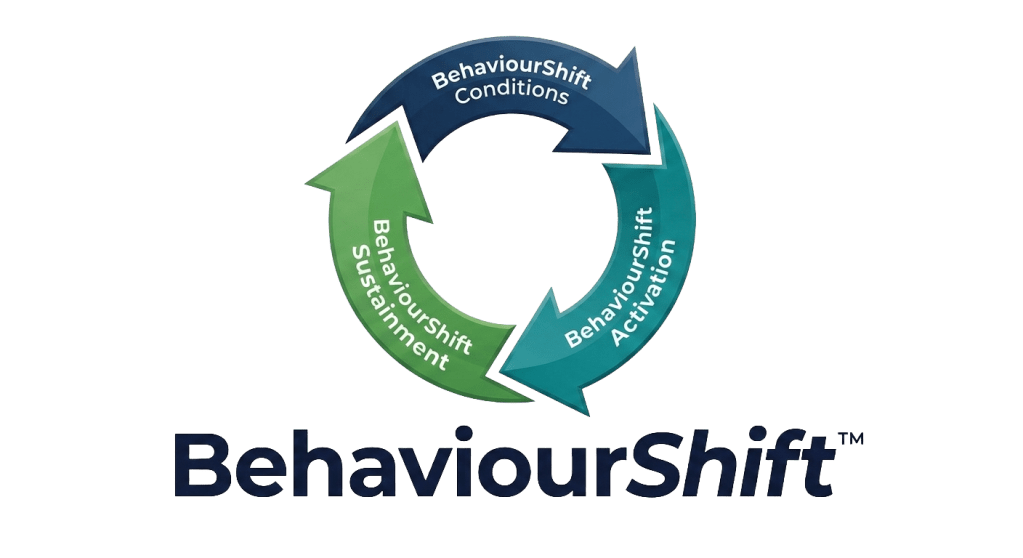
BehaviourShift operates through three connected phases designed to move organisations from insight to sustained behavioural change.
Phase 1 – BehaviourShift Conditions Diagnostic
The BehaviourShift Conditions Diagnostic assesses the strength of the five conditions across the organisation. These conditions are a key foundation to allow learning to take place and for it to translate into changed behaviours.
- Behavioural Clarity
- Leadership Alignment
- Psychological Safety
- Reinforcement and Accountability
- System Alignment
The diagnostic gathers insight from employees and leaders to understand the organisational environment in which behavioural change is expected to occur.
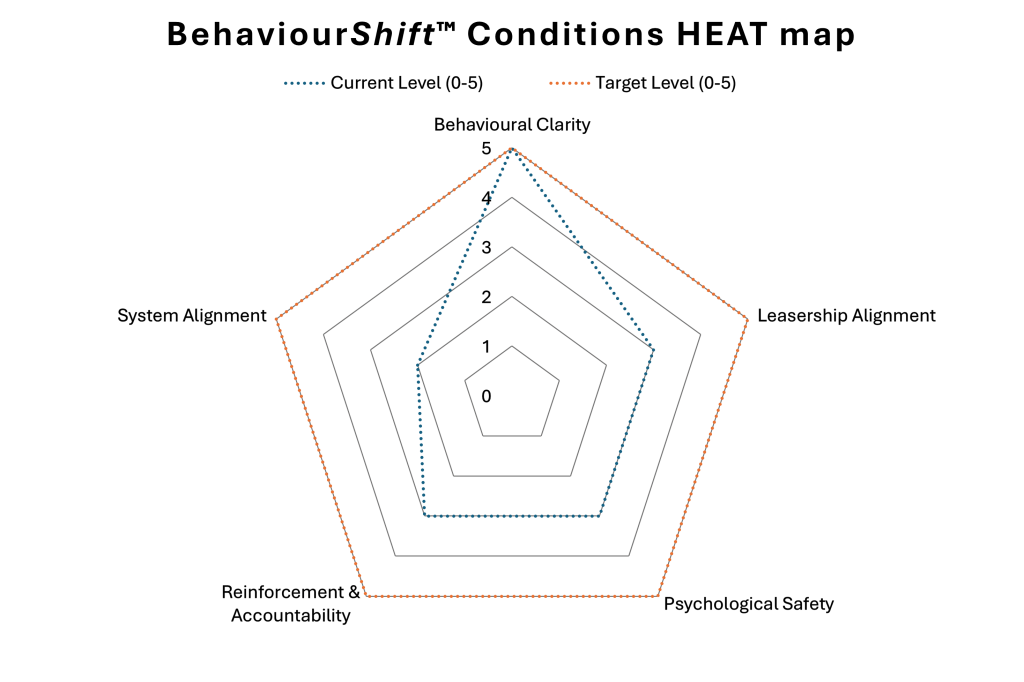
Outputs include:
• BehaviourShift condition heat map (seen on the left)
• Behavioural risk insights
• Report highlighting priority areas for action
Phase 2 – BehaviourShift Activation
Once the conditions are understood, development initiatives can be designed or aligned to support behavioural change.
This phase focuses on translating learning into observable behavioural change within the reality of day-to-day work, rather than treating development as a standalone event.
Typical activation approaches may include:
Typical activation approach will include:
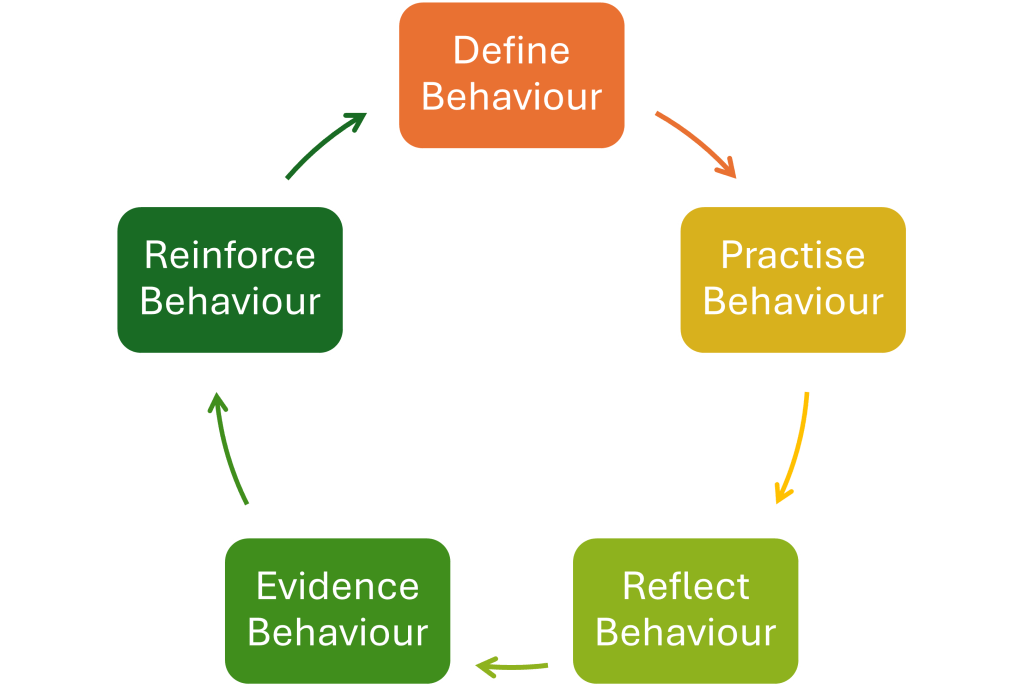
• Defining specific observable behaviours linked to organisational values
• Equipping leaders with practical ways to model those behaviours in team interactions
• Integrating behavioural accountability with individuals, teams and organisations
• Creating opportunities for colleagues to practice and apply behaviours in real work situations
• Supporting managers in coaching behavioural change within their teams
The aim of this phase is to move from learning new skills and gaining new knowledge to actively practicing them in the workplace.
Phase 3 – BehaviourShift Sustainment
Behaviour change becomes sustainable when it is reinforced consistently over time.
Without reinforcement, even the most effective development initiatives can gradually lose momentum as the pressures of everyday work takes over.
This phase focuses on introducing structures that help behaviours remain visible, discussed and supported across the organisation.
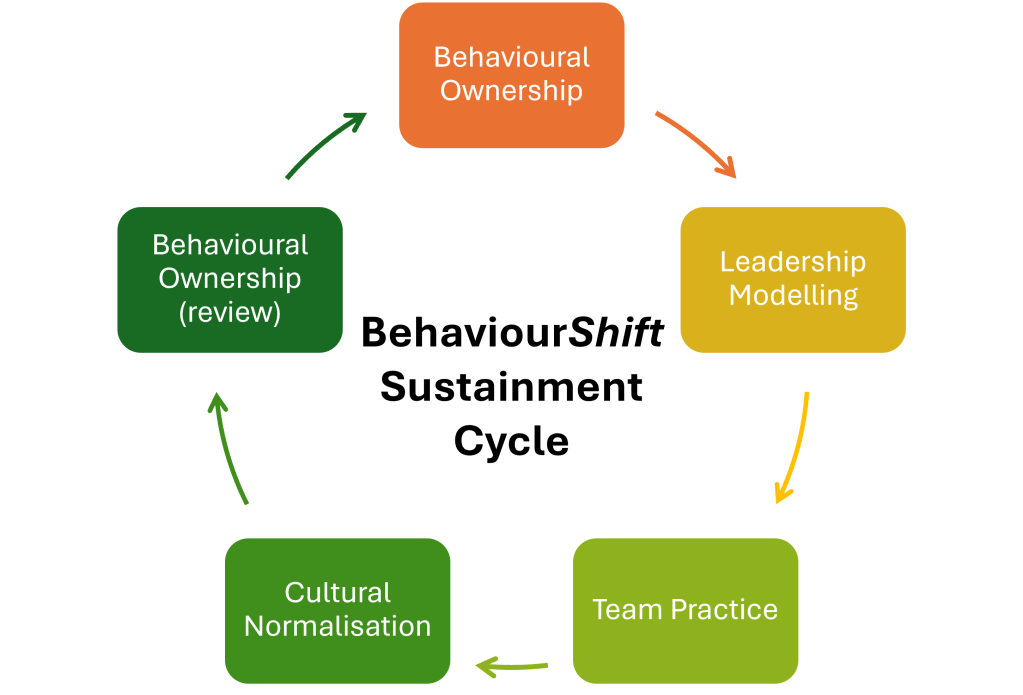
Sustainment approaches may include:
• Integrating behavioural reflection into regular leadership and team conversations
• Establishing 30-60-90 day follow-ups after development initiatives
• Supporting managers/leaders to coach behavioural progress during 1-to-1 discussions
• Reinforcing behaviours through recognition, feedback and effective communication
• Support in aligning organisational processes such as performance reviews or development planning
These mechanisms help ensure that behaviour change moves beyond initial learning and becomes part of everyday practice.
Turning Insight into Behaviour Change
Learning and development initiatives are most powerful when they lead to observable changes in how we communicate, make decisions and support our teams and those around us.
BehaviourShift™ focuses on creating the conditions that allow those changes to take hold. By understanding the organisational environment for behaviour change, activating leadership behaviours in real work situations and supporting to reinforce them over time, organisations can move beyond good intentions and create meaningful, lasting change.
If you are exploring how leadership development can translate into real behavioural impact within your organisation, a BehaviourShift™ conversation is a good place to start.
 leadershipeqcellence.co.uk